Smoky Chicken & Bacon

4 Secrets to Nutrient Dense, Nourishing & Delicious Food ~ meat, fat, bone & broth. Any chef will back us up on the importance of cooking meat on the bone and the presence of fat to add depth of flavour to a meal. However, our taste buds are also detecting the nutritional goodness in a meal cooked this way. Slow cooked meats with all their parts intact, including fat and connective tissue are far superior in taste and nutrition. Meat cooked this way will have a higher content of minerals, fat soluble vitamins, omega 3 fatty acids and joint building substances known as glycosaminoglycans.
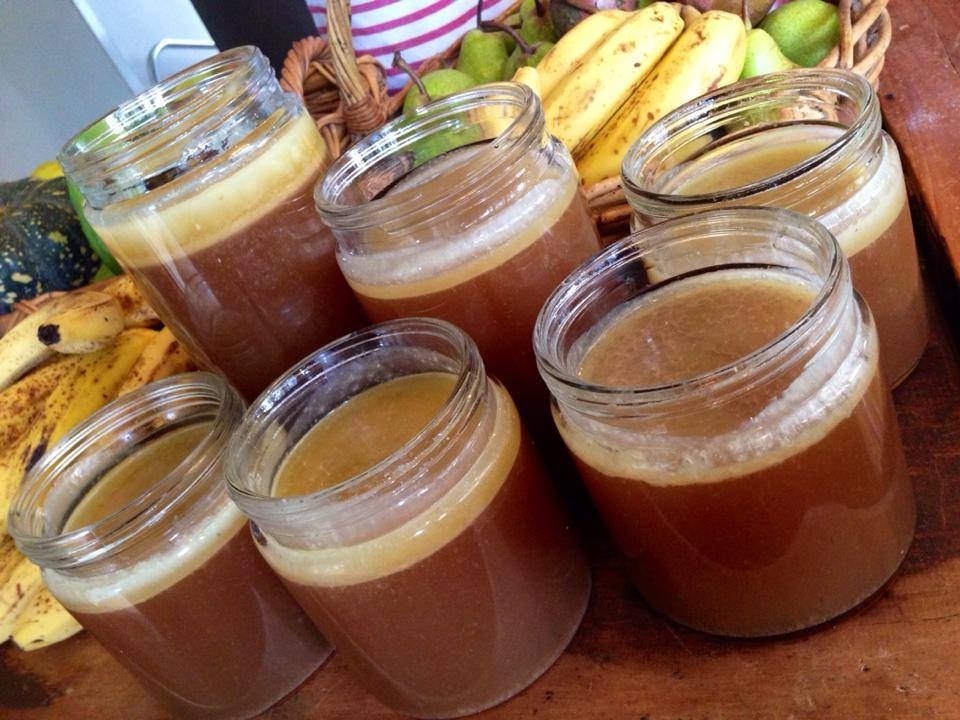
When we can’t always cook meat on the bone, we always try to add nourishing bone broths to enrich our meals with flavour and nutrition. Bone broths are high in glycine (an amino acid) required for the metabolism and disposal of methionine (an amino acid) found in muscle meats. Bone Broths a culinary and nutritional match for muscle meats.

- 2 large red onions finely diced
- 2 red capsicums diced
- 2 large cloves of garlic diced fine
- 1 large tabs. Smoked paprika
- 4 large rashers of nitrate free bacon
- 200g of tomato paste
- 2 cups of chicken stock
- sea salt & pepper to taste
- 10 chicken thighs or legs (ideally with bone in)
- *if using boneless thighs, cut them in half or thirds.
- Ghee
- Heat 2 tabs. ghee in heavy cast iron pot.
- Brown thighs on all sides and remove from pan.
- Add another Tbs of ghee and fry bacon until browned.
- Remove from pan.
- Add more ghee if required and fry onion, garlic and capsicum until soft.
- Add bacon and paprika and stir through until fragrant.
- Stir tomato past through, along with salt and pepper to taste onion/bacon mix and cook on low heat until soften and combined.
- Add chicken stock back to pot. If using thigh on bone you can add thighs back at this stage also.
- Bring to a gentle simmer cover and cook for 10mins.
- Remove lid and allow to cook and reduce for about 30-40mins, until liquid is rich and thick *(If using boneless thighs add to mixture about 10 mins before end of cooking time)
- Serve on a bed of mashed sweet potato or potato, or crispy roast potatoes, sautéed greens or even rice.

Dots’ Chox
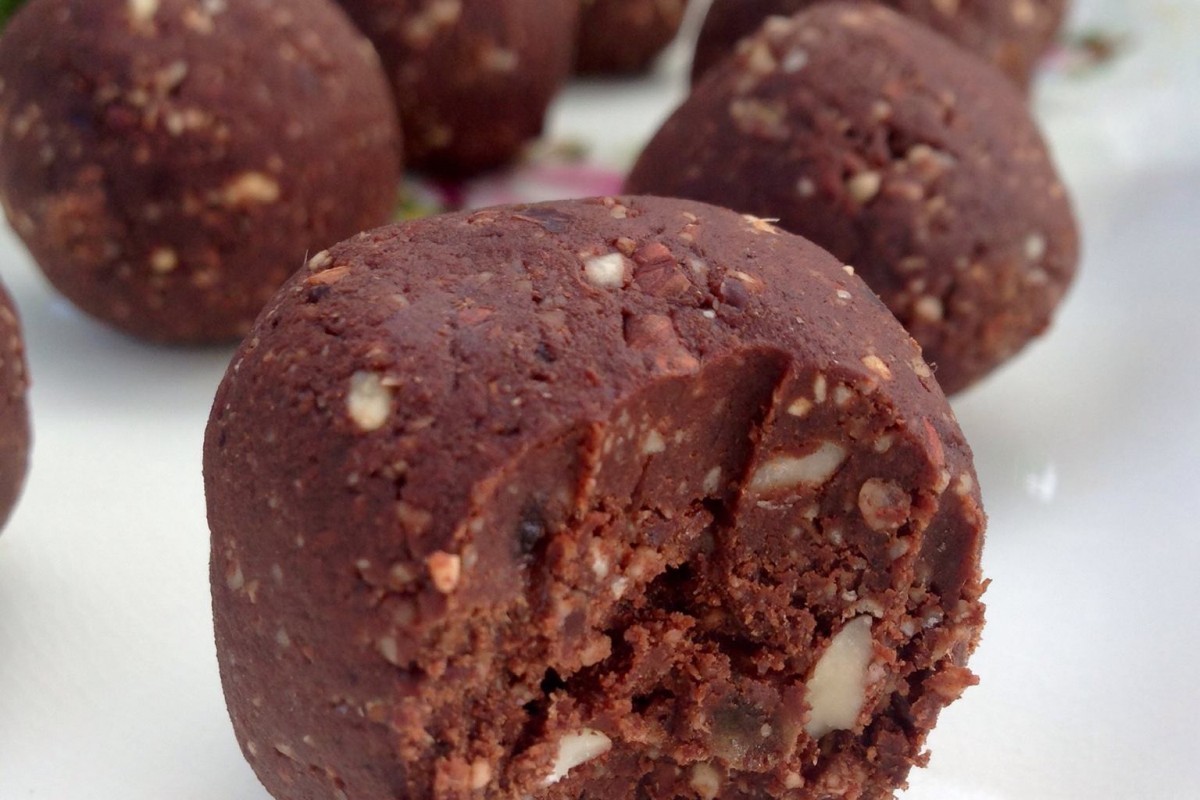
Looking for a new love? Well look no further. Here is the recipe for a promised treat and it ain’t ‘just’ a bliss ball. It’s a divine and delicious morsel to share and enjoy with another friend. Another ‘Dot’. Yes, that’s right, “Dot” is our affectionate alternative term for ‘mate’ or ‘buddy’. Pinky and I call each other this all of the time. So make some of “The Dots’ Chox” and share them with all of your “Dots”. And in the meantime if we refer to you as our Pinkfarm Dots, you now know what we mean! Enjoy. With love and dotship from Pinky & Farmer.

- 250g of Hazelnuts ground to a meal
- 220g of medjool dates
- 80g cacao
- 60g cacao butter (melted)
- 1 teas vanilla
- 1 teas cinnamon
- Grind nuts in processor to a medium to fine meal.
- Add remaining ingredients and whizz until mix comes together.
- Press together and roll into balls.
- Refrigerate to set firm.
- Mindfully melt in bliss!
- If you want a slightly different texture (more courser nuts) you can just blend everything at once.

Childbirth & Gut Health

My food journey has led me to one of the most enlightening and clarifying places I have been- gut health. This point in my food journey has made a pivotal connection with my other passion in life…..childbirth. Every birth witnessed is a moment honoured! It is with great pleasure I choose to be “with women”……a midwife witnessing the miracle of birth and babies and the blossoming of mothers!

When a baby is born they are exposed to the mother’s micro-flora which plays a big part in colonising that baby’s gut. As a baby passes through the birth canal, “…bacteria are swallowed by the newborn, they travel through the stomach and colonise the upper and lower intestine, a complicated process that evolves rapidly” (Sloan, M. 2012).
The bacteria that is in the mother’s gut, will be in her birth canal. The mother’s (and father’s) gut health pre-conceptually and antenatally is a critical factor contributing to the correct colonisation of their baby’s gut at the time of birth. Bacterial colonisation of the newborn gut at the time of birth plays a key role in the first steps of immune system development and the future health of that baby. 
As a midwife of 14 years, no where in my career has anyone highlighted this simple scientific explanation. The connection between childbirth and gut colonisation of the newborn, is a concept with ramifications that need to be bought to the surface; parallel with the importance of breast milk. These are crucial factors contributing to the development of good gut health.
Life begins with the pre-conceptual period, pregnancy, birth and breastfeeding. What happens during this period is influential on the events that unfold along the continuum of life and health thereafter. “It is of great importance to know that the initial bacterial colonisation of the neonate appears to play a crucial role in inducing immunity in the immature human being, and that a sub-optimal process could have definite consequences” (Langhendries.J.P 2005).
I recognise and accept, that as a midwife I can play a pivotal role in helping women to achieve optimal gut health and birth experiences that will enhance the development of good gut health in their babies. “A cesarean section doesn’t automatically condemn a child to a lifetime of asthma or eczema, just as a vaginal birth isn’t a guarantee of perfect health. A woman who has the option of choosing her mode of delivery should add this to the many other factors she must weigh in deciding how her baby will be born” (Sloan, M. 2012).
Good gut health is the essence for our children and children are the key to our future. Being a midwife is a gift. I honour the complexity of the miracles that we share in. Wisdom, babies, family and most importantly….MOTHERS!

EGGS – are they always what they are cracked up to be?

Googies, bumnuts, cacklberries or eggies! What else do your family call eggs? Unfortunately, the eggs predominantly available in supermarkets today are not the healthy little bundles of nutrition that nature intended them to be. WHY?
Have you ever seen how happy a chook is roaming around on the green grass, scratching up the mulch in your garden, making a delightful mess? Happiness and delight beams from these chooks as they get their heads down and bums up scratching and pecking at the grass and turning over your neatly mulched gardens! This is a darn sight different to their less fortunate counterparts that are confined in small cages or even large barns, away from sunlight, pastures and freedom to move.
This post is not intended as an animal liberation rant….need we say anymore. But what we do want to highlight is that the buck does not stop there. Chickens deprived of sunlight, access to green pastures and the freedom to scratch and forage for insects, grubs and worms, produce eggs that are also deprived of nutrition, which means their eggs are also depleted of nutrition.

Just how deprived can an egg be? Compared to eggs from pastured fed Chickens, caged and barn raised chickens produce eggs that:
- are 4-6 times lower in Vitamin D
- contain 2/3 less Vitamin A
- have 2 times less omega 3 fatty acids
- have 3 times less Vitamin E
- have 7 times less betacarotene
Although eggs from chickens raised on organic pastures are often as much as double the price, the investment in nutrition and ultimately your health is well worth it. Not to forget the detriment that regular caged or barn raised eggs may pose. Aside from the chickens being raised in completely inhumane environments the eggs produced by these animals are products of solely grainfed animals with an inferior nutritional rating. “Factory chicken feed often includes protein from less savory sources: poultry parts and feathers, rendered cats and dogs, beef fat, and cattle bone meal” (Nina Planck 2006).
The problem with eggs from chickens fed grain is that the ratio of omega 3 to omega 6 fatty acids is completely unbalanced, having 20 times more omega 6 than omega 3 fats. The ratio of omega 3 to 6 in pastured fed eggs is 1:1. This is the optimal balance for health. Too much omega 6 leads to inflammation which is the precursor to many illnesses. Omega 3 fats are important for preventing obesity, diabetes, heart disease and depression.
Eggs from chickens raised on green pastures are a nutritional bonanza. As well as providing a good source of complete protien, antioxidants, beta-carotenes, fat soluble vitamins A & E, pastured eggs are also rich in lecithins, biotin and betains.
“Eggs in the cupboard are a meal on the table”. This is a very wise piece of advice handed down by an elder and it couldn’t be anymore truthful. Between our Pinkfarm families we would consume at least 12 dozen eggs a week and thus we place high priority on sourcing eggs from chooks ranging on organic pastures. We wouldn’t and couldn’t be without them! In morning smoothies, almond cakes, scrambled, fried, poaced, boiled, zucchini slice, zucchini fritters, almond cookies, mayonaise, fritatta and custard! Eggs are used everywhere in our homes.
Just how do you know which eggs to use? Ideally, keep your own chickens in a moveable pen on the grass or better still free ranging. Most importantly is to know where they come from. Avoid caged eggs. Source eggs from chickens raised on organic green pastures. Don’t trust the box labelled “free range” with a misleading picture of chickens grazing on green pastures! More often than not, free range chickens, althought not confined to cages are housed in barns or enclosures that are so heavily stocked that their is little room to move freely and the pastures have no way of co-existing with so many hens.
If you are in Qld, MUNGALLI CREEK on the Atherton Tablelands are producing eggs. Their chickens roam freely on the green pastures amidst the dairy farms. OVASTON ORGANIC EGGS are also available in Qld and these chickens are free to roam on green pastures. If you are in NSW, Holbrook eggs are a reputable brand for organic pastured eggs.
For a more extensive list of pasture raised eggs visit the flavour crusador who has created an awesome egg directory for Australia.
http://flavourcrusader.com/blog/2011/09/free-range-eggs-australia/
Kids eating cultured veggies?

With Gut Health being at the centre of our food journeys, the inclusion of cultured veggies with our meals on a daily basis, is of extreme importance. Why?
- Fermentation increases the nutrient content of vegetables thus giving you more bang for your buck
- They help to digest proteins of other foods we eat them with
- Helping to repair a gut damaged by processed foods
- For Controlling candida
- Benefits of reducing allergies and inflammation
- To boost immunity
- They provide beneficial bacteria for good digestive health (nature’s probiotic)
- They provide enzymes needed to digest and absorb nutrients
- To curb sugar cravings
In addition to this fermented veggies have many other bonuses:
- They are convenient
- They make a great addition to any salad
- They make a great condiment to complete and compliment almost any meal.
- They add colour to your plate
- They taste delicious!

How do we get our children to eat Cultured Veggies? This can be a challenging process if you are introducing them to older children or children with an aversion to salty foods. Starting gently and persevering is the key
- Start young. Introduce these foods to your baby.
- Make them a part of your daily table setting. Much like salt and pepper or sauce etc.
- Role model. You are one of their greatest influences. If they see you eating them they are more inclined to want to try.
- Always encourage the principal of ‘tasting’ foods not just once but numerous times (Lacto-fermented veggies are an acquired taste)
- Explain to your children why they are good for them. Don’t under-estimate their understanding and comprehension of this.
- Start with popular kid friendly cultured foods (such as sauerkraut with apple and dilly carrot sticks).
- Involve them in the process of making them at home.
- Encourage them to serve there own.
- Offer choices of different ferments – with varied colour, texture and flavour.




 "Pinkfarm” has been created by 2 friends on a real food journey; learning, sharing, creating, inspiring and challenging politically correct nutrition. A country girl living on a farm on the beautiful Atherton Tablelands with a bustling house of 5 children and a city girl living in a metro Sydney townhouse with 1 beautiful son.