Milk aint Milk

Not all milk is created equal. Raw milk, homogenised, pasteurised, organic? What does it all mean and why are we drinking milk anyway?
Humans have been conventionally milking animals (sheep, goats and cows) for their milk for at least 1000 years but there are clues throughout history that we have been consuming milk for a much greater time.
The cow’s milk we find on our supermarket shelves is far from what was consumed throughout history. The milk in the shops is PASTEURISED and usually always HOMOGENISED.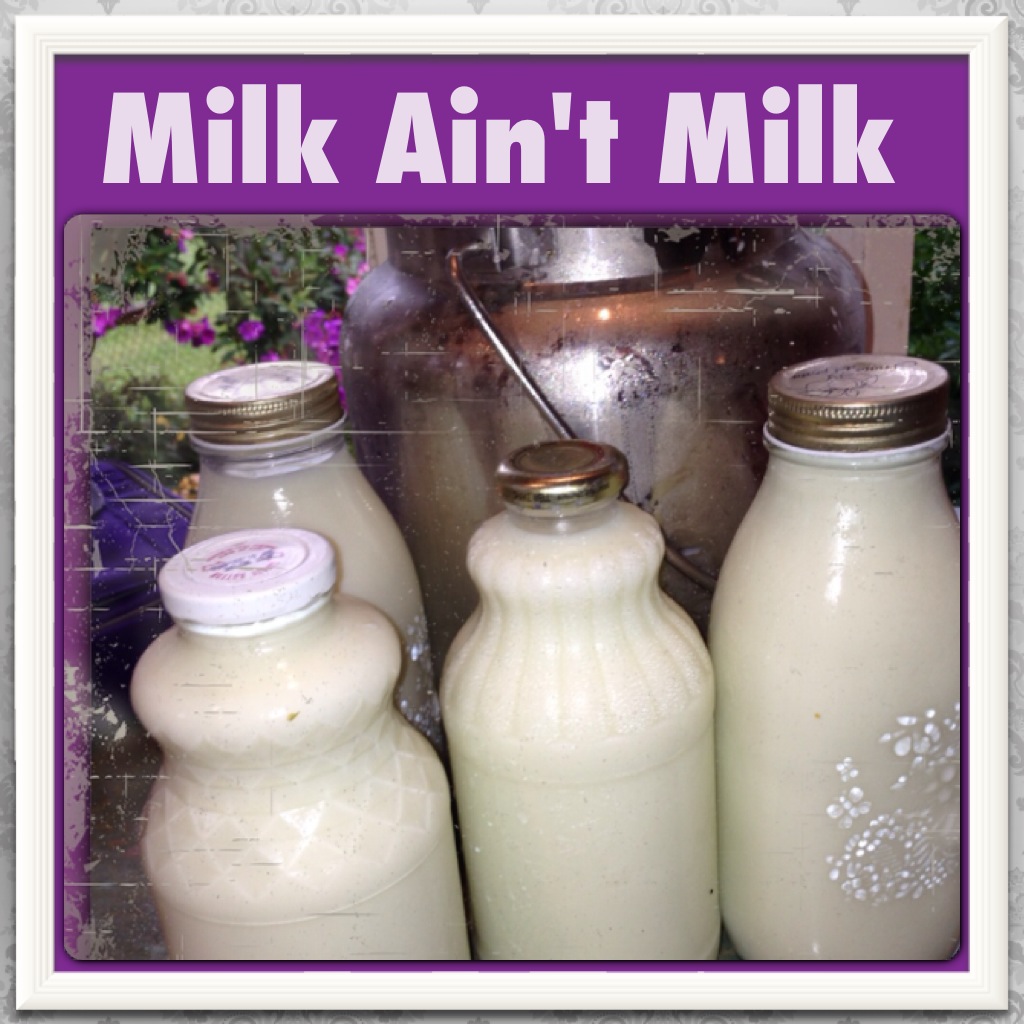
What is PASTEURISATION?
Loui Pasteur discovered pasteurisation in the late 1800’s. Milk was originally coming straight from the family cow or in glass jars from the local dairy. As US cities grew, urban dairies developed, and were often placed next to Whisky distilleries so the cows could be fed a cheap diet of ‘mash’ called ‘distillery slop’. These cows were confined, living in unhygienic conditions and being fed an unhealthy diet that was completely unsuited to their ruminant bodies and milk production. Disease was common and the milk was inferior, often unable to be used to make cheese or butter.
Outbreaks of tuberculosis, infant diarrhea, scarlet fever and typhoid were on the rise and infant death rates from contaminated milk accounted for half of the infant deaths in NY in 1839. Calls for pasteurisation were made as this meant killing pathogens that were carried in the milk. Initially raw milk was not blamed for illness and disease and a push for greater inspection laws of dairies was seen as the answer to decrease spread of disease. However, in 1914 a law was passed and pasteurised milk was the only milk that could be legally sold.
Nina Plank sums this up beautifully stating, “ The trouble starts when you take a cow away from her natural habitat and healthy diet and force her to become a mere milk machine.” It’s such a shame that mandatory inspections were not enforced to improve cow health and dairy hygiene but rather a quick fix of using pasteurisation to clean up for some lazy and unscrupulous farmers. Still today, some dairies have low health and hygiene standards, with farmers knowing that pasteurisation will ‘kill off’ any pathogens.
Pasteurisation of milk does not only kill pathogens but this heating process also kills enzymes and immune factors, beneficial bacteria, decreases vitamin content and destroys B vitamins and denatures milk proteins. Not only is pasteurised milk a dead and lifeless product, pasteurisation is a huge reason why many people do not tolerate milk. They are often unable to digest the denatured protein (casein) and because beneficial enzymes have been killed off from the heating process, lactose is harder to break down.
What is HOMOGENISATION?
Homogenisation is a more recent process and has been known as “the worst thing dairymen have done to milk.” Our grandparents probably remember the clear cream line that would settle on top of the milk that would be delivered by the milkman. Homogenisation is a process that forcefully blends the fat molecules throughout the milk so the cream no longer settles on the top. The process pumps the milk at high pressure through a fine mesh reducing the fat into tiny particles and pushing it around the milk. Not only is homogenisation just another process the milk is put through but this also oxidises the fats and changes the way they behave in the body.
What about ORGANIC MILK?
We usually assume that when we see the organic label it must mean better. Not always. Some organic milk has been ULTRA-PASTEURISED. This means that the milk has been heated to even higher temperatures killing off almost every element of goodness. Ultra-pasteurisation is done to increase the use by date of the milk. Always check your use-by date. Read your label!
Organic milk is not always an indicator of milk from pasture fed cows. Sometimes organic cow’s milk may be produced in feed-lot dairies where cows are fed solely on grain and the cows have no access to pastures at all. This predominantly occurs in the US and China, however there are some feed-lot dairies in Australia. According to Dairy Australia, …” the number of feedlot dairy farms in Australia is small, but there are many farms where a total mixed ration is fed for part of the year.”
ORGANIC RAW MILK
Raw milk from cows that are feeding on pasture is a living food, full of beneficial enzymes, bacteria, vitamins and minerals. If you are able to access raw milk it is worth the switch.
BENEFITS OF RAW MILK FROM COWS FREE TO ROAM ON PASTURES:
• Contains fat- soluble Vitamins A, D and K, which are essential for a healthy immune system and for the absorption of other vitamins and minerals (especially calcium and magnesium). Pasteurised milk often contains synthetic Vitamins that are not easily absorbed by the body
• Is full of beneficial bacteria essential for gut health and increased immunity
• Contains anti-microbial properties
• Contains enzymes that help the digestion of the milk. Often people who have intolerances to pasteurised milk can tolerate raw milk.
The Gift of a Garden
Meandering around the dense gardens of my great aunts as a child was like being in a mystical and magical land. The coolness of the dappled shade, the crunching of leaf litter, the sweet, earthy smells and crawling under the low hung branches of nostalgic trees are memories likened to the reality of living a fairytale in enchanted places.

Exploring the landscape and terrain of historical trees that lined the creek and farm I call home was the essence of my childhood. The memory of climbing to the very tops of sprawling trees that were hundreds of years old to feel the fresh air kissing my cheeks and shouting delight at the beauty of the outlook was an experience of the true freedom of a child. I was mesmerised by trees and their naturally artistic forms. Their knots and gnarls, and outreaching branches embrace you. Old trees are old souls and have weathered the blessings and perils of many lives.
I have memories of my Mum spending hours in the garden, digging, weeding, planting , mulching & watering tree after tree, garden after garden. Back then we didn t have automated irrigation and all of the trees that she planted were watered by hand. Many times my siblings and I would take it in turns to hold the hose over that tree for as long as it took us to count to 100! The wonder of what those trees would become in years to come clouded my imagination.
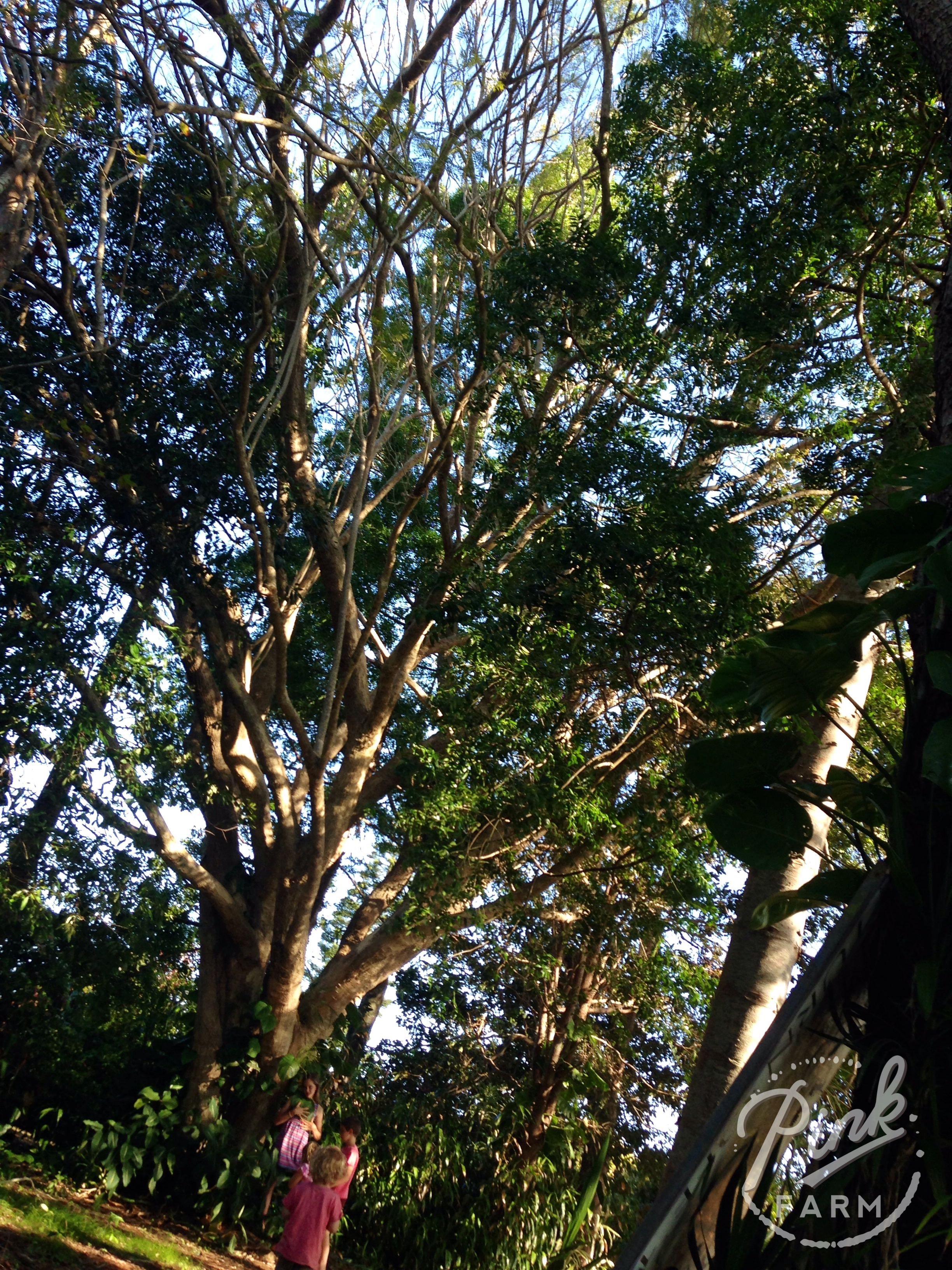
As a child, I did not create a connection between my Mum’s hard work in the garden and the magical sense of being in my aunties established gardens. Gardening was hot, boring and hard work. Although I felt a strong connection with the beauty and mysteriousness of established gardens and natural forest trees, I do not recall having a conscious love for gardening until I became an adult.
After many years, my Mum’s garden has flourished into a magical and mystical place like my aunties’ gardens. My children now experience the magic and mystery in Granny’s garden, exploring, building cubbies and swinging from trees. Granny’s garden is safe and exciting and the children relish in exploring and adventuring into the many places that were at the essence of my childhood.

I have not escaped the fact that gardening is inherent in me. Once I discovered this gift, gardening was no longer hard work. I aspired to create a magical place of my own for my children. I had a vision. A vision that my Mum had when she spent days on end gardening with children at her feet. I had learnt this from her. I have learnt that gardening is spiritual and energising. It fosters a deep connection with the land and Mother Earth. Awareness and freedom, appreciation and love grow out of gardening. Nurturing and creating our safe haven of plant and animal life is nourishing to the soul. Giving life to plants and animals through gardening, restores, replenishes and saturates one with love and pride.
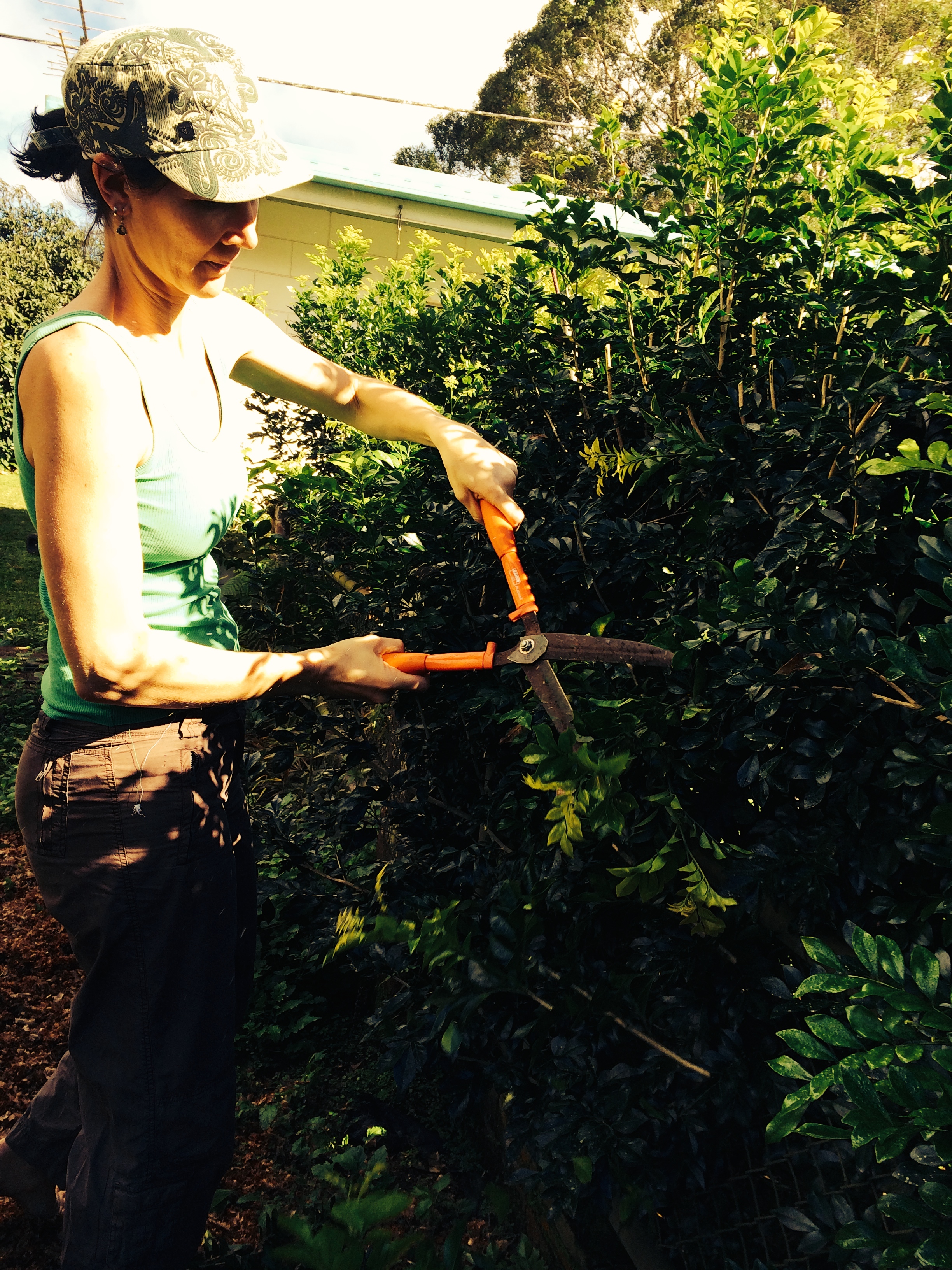
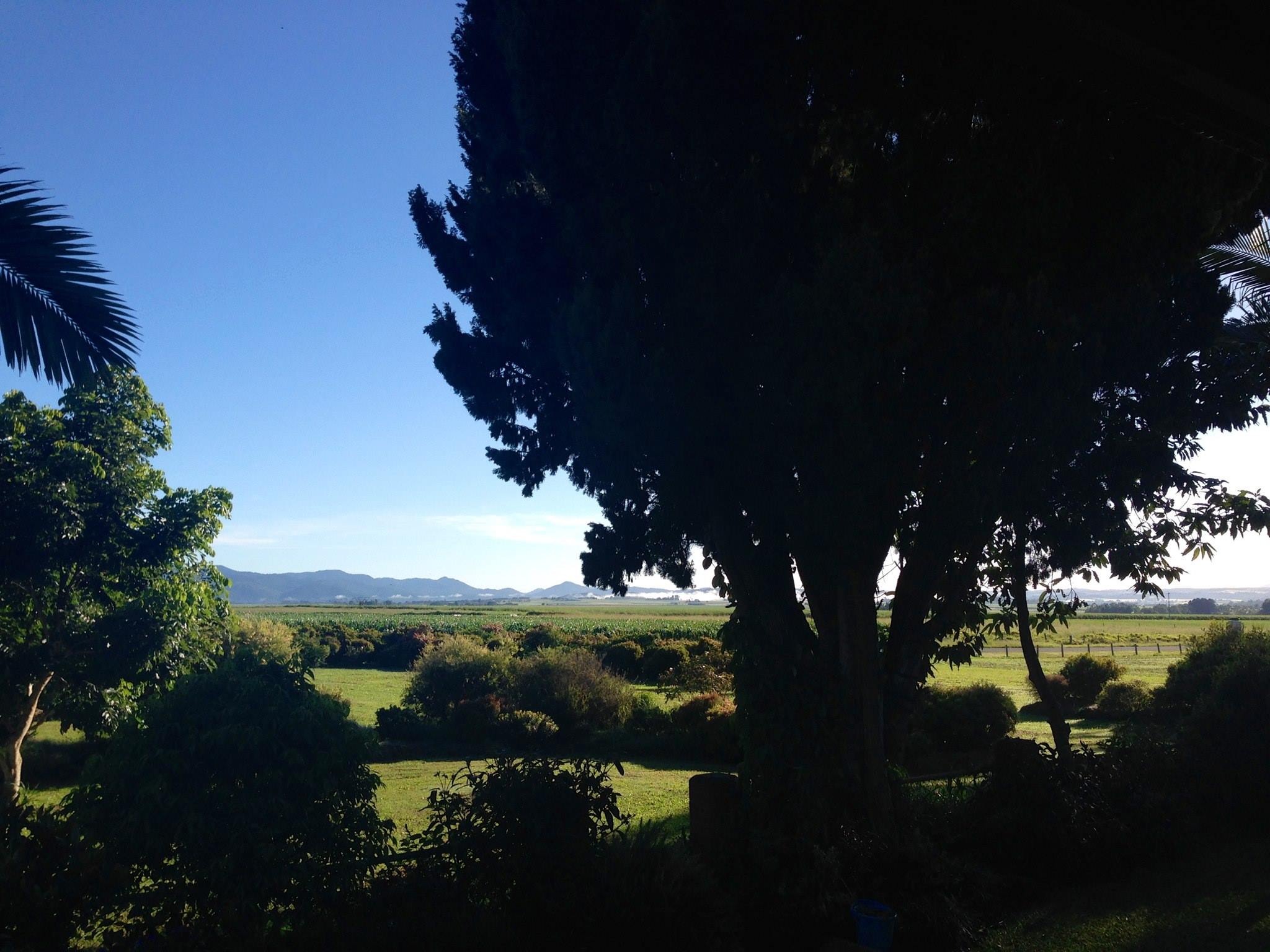
We have moved house many times in my married life, creating little garden havens where ever we have been. Fortunately, 7 years ago we landed our feet on some land, not far from my birth and home ground. A house on 20 acres of bare grassed land, exposed to the highway with the odd large tree. It was like death’s silence in the absence of the sounds of nature. No trees, no flowers, no birds, no insects. No life.
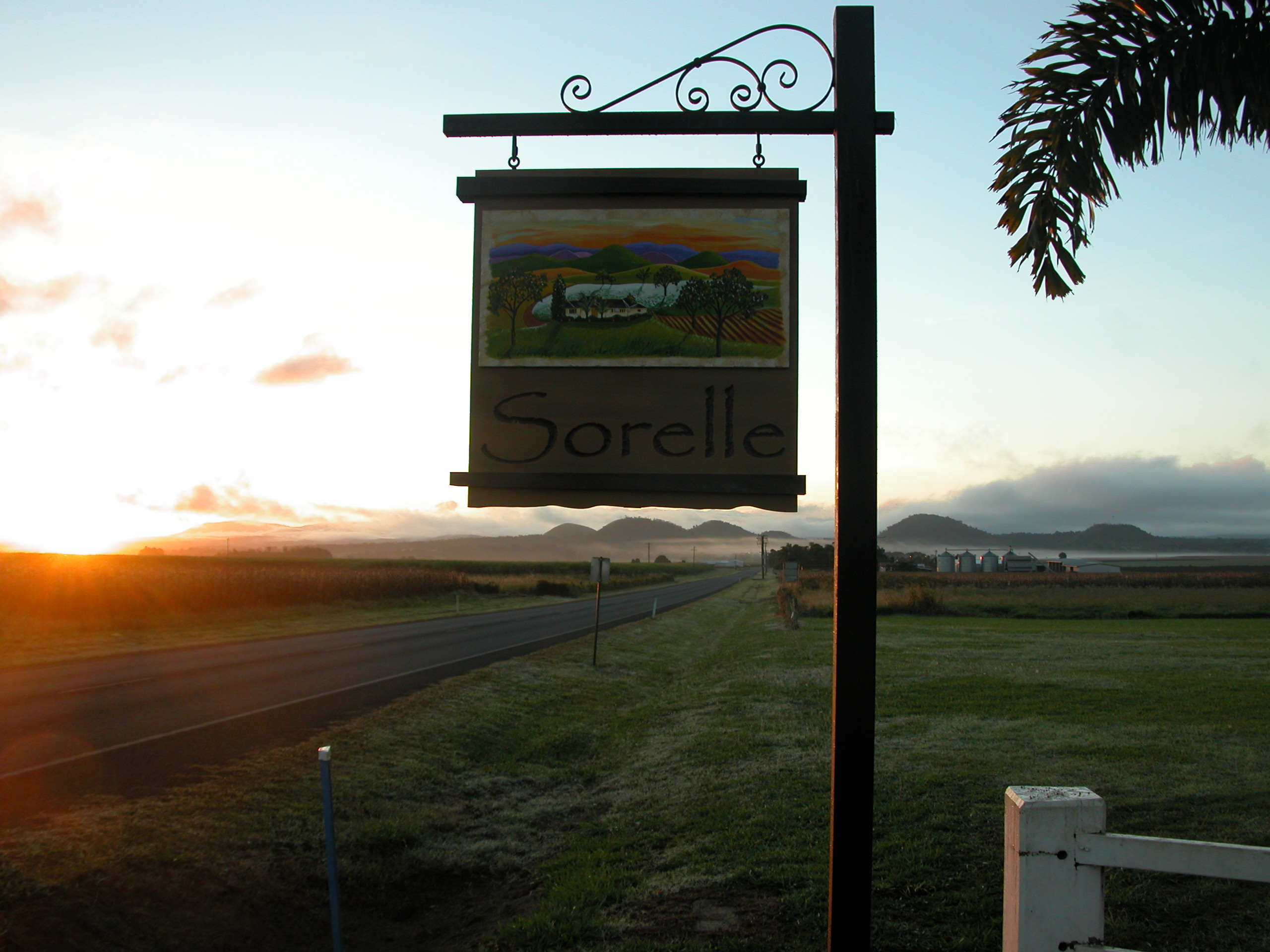
With work and toil we began to build our safe haven, planting tree after tree, creating garden after garden. We have spent years, mulching, weeding, watering, pruning and meandering around our plants, protecting and nurturing them as they grow. 7 years on and we are indulged with bamboo groves, rainforest coves, an abundance of birds, butterflies, flowers, food & children frolicking amongst it all. Rewarded with the harmony of co-existing life forms, our garden provides us with so much. So much more than one can imagine. The gift of a garden.
What’s Wrong with Canola Oil?

We’ve had a few questions about Canola Oil so we thought we’d give a brief summary of why this is not a good choice of oil to cook with, use in baking or see it on an ingredients list in our packaged food. Despite these claims however, Canola Oil is often touted as the ‘healthy oil’ because of its high smoke point, combination of monounsaturated and polyunsaturated fat and significant amounts of Omega 3.
Before we get into the history and production of canola oil, first just think of olive oil- cold pressed from an olive. Macadamia oil- cold pressed from macadamia nuts. Coconut oil- from the coconut… Canola oil? From the canola? No… the rape seed plant. Rape seed oil had been used in Asia for many years but the oil was extracted by first cooking the seeds and then extracting the oil at low temperatures. It hadn’t caused any health issues to the Asians who had been using it for centuries, but it is thought that the low level extraction process made it safe. It was banned in the US in the 1950’s because it was found to contain toxic Eurcic Acid. During the early 80’s a hybrid version of the plant was created by a Canadian man, thus giving it the name Canola Oil (Canada oil).
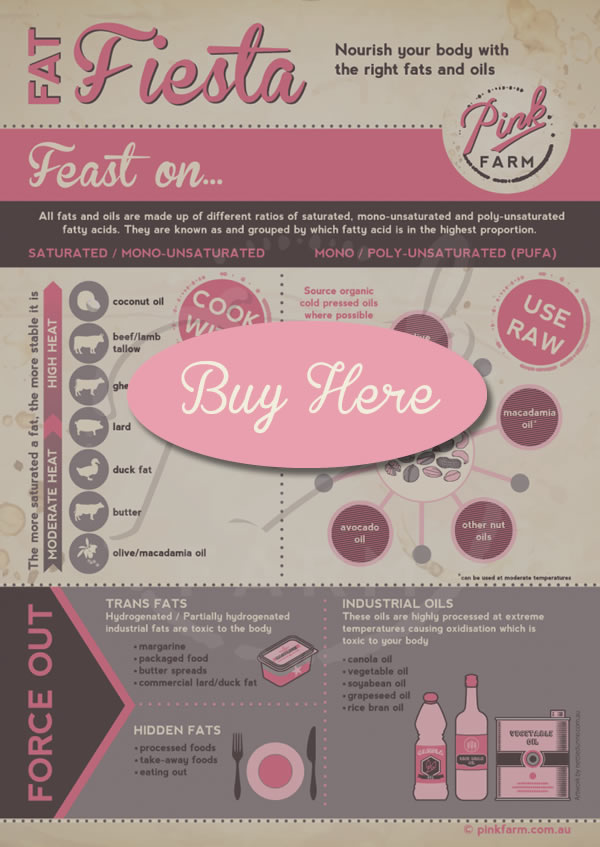
The modern processing of Canola Oil is a very chemical laden process. It starts with a high temperature, mechanical extraction process, followed by refining, bleaching and degumming which needs more high heat processing. The Omega 3 fatty acids found in Canola Oil go rancid when exposed to these high heating processes thus creating foul smelling fumes so then it needs to be deodorised. This deodorisation process turns some of the Omega 3 into trans fats but the true value of these trans fats is not always listed. Canola oil, when used in packaged food has been hardened by the hydrogenation process resulting in more trans fats.
Generally when we think about fats/oils we want to answer yes to these questions….
- Did our great great grandmothers use it?
- Did it go through minimal and low heat processing?
- Is it close to being a natural product?
Canola oil definitely doesn’t answer yes to any of the above. Canola Oil has no nutritional benefit and is toxic and inflammatory in our bodies.
Does Exercise Equal Health?

Being healthy is not just about exercise and exercise is not just about going to the gym.
I’ve been religiously going to a gym for 20 years. Lifting weights and strength training had become my absolute normal and even when travelling, I ensured I found a gym wherever I went. In recent years I have had a new revelation…
Nutrition plays a far more powerful role in health than exercise. Yes, I still love working out and will always incorporate the gym into my weekly routine, but reflecting back, I realised I blindly believed that working out and my slight physique was an indicator of health. Years later I understand the power of nutrition and eating a healthy diet has enabled me to feel healthy from the inside out. I have a life energy I had never had before and exercise comes with an added bonus of endorphins.

I still highly value exercise but I now understand the connection between the way I exercise and how this mirrors functional movements (real world situational movement- lifting, bending, twisting, pushing, pulling, and squatting) that can be applied in everyday activities. Exercise to me now is more about strength and performing movements that we were designed for, rather than body image alone. Understanding our primal past means I have more understanding of why I would want to lift heavy things, squat and deadlift regularly and have upper body strength. In saying that, I still train hard and set monthly and yearly goals for myself. I am proud to share that I have worked hard to be able to do 10 full chin ups and this year I am working hard on a 100kg deadlift! The personal satisfaction I have gained from achieving these strength goals is extremely rewarding in so many ways.
How do you feel when you do something you never thought you could do?
I had often chatted to Farmer about my love of exercise and wondered how this compared to life on a farm. I knew she was always active but didn’t have a real appreciation for the daily tasks she was involved in. I used to often think that Farmer really missed this part of the ‘health’ puzzle. Boy was I so wrong about that!

Since the development of Pinkfarm we have spent much more time chatting on the phone. I soon came to learn just how active Farmer was on a daily basis. Whether that meant lifting bags of potatoes onto a truck, mulching, planting trees, or helping with fencing, Farmer was actually engaged in functional movements almost every day. Lifting, pulling, pushing, squatting, bending and twisting. On a recent trip to Far North Queensland to visit Farmer, she invited me to apply my gym skills in tasks around the farm. This particular afternoon I was to roll out barrels of hay, carry buckets of grain and chop firewood. I think she was especially chuffed to deck me out in the farm overalls and put me to work! Once engaged in the task, I was loving it. Loving it because I was working out, but more so because I was getting real work done. I was going to reap the rewards of my labour when done. It was then I married the connection of two passions… I got to apply my strength training with a purpose and appreciate the reward of life on a farm.

EMFs Should We Be Worried?

Mobile phones, ipads, wireless routers, laptops, baby monitors, digital clocks, microwave ovens, induction stove tops… and the list goes on. We are surrounded by radiation. In denial about that? We must say, we were, we are… still are?
Each year we attend the MINDD Foundation Conference. MINDD stands for Metabolic- Immunologic- Neurologic- Digestive- Disorders and works with children with conditions like Autism, ADHD, Asthma, Allergies, Depression, Learning and Language Delays and can give real hope for them as they work with Integrative Health Care Practitioners that focus on the whole child. At the May 2013 conference I heard some amazing lectures on immuno-brain-gut connection I also listened to speakers talking about other toxins in our environment.

Nicole Bijlsma a naturopath, acupuncturist and Building Biologist (home audits and testing of EMF’s, dust, mould, and other toxins) spoke about the real concerns we should have about electromagnetic fields in our environment. After 10 miscarriages she came to learn that she had been sleeping next to a meter box, which emits an extremely high EMF.
The two most astonishing things I learnt from Nicole’s lecture were:
1. There is glaring evidence (25 000+ articles) showing the connection between man-made electromagnetic fields and ill health in humans.
2. Australia’s exposure standards (compared to countries like France, Germany, Austria, Switzerland, Russia) are 100 to 1 000 000 times GREATER than what is permitted in those European countries! Why do we allow this? Are we Guinea Pigs?
We had both been alerted to the dangers of EMF’s prior to now, via inspiring talks from Don Chisolm and other sources. Neither of us have microwaves nor induction cook tops, and Farmer recently made the switch from a cordless phone to an old fashioned corded phone. However, convenience has seen us use our mobiles to talk more than ever, especially since launching Pinkfarm. Why do we keep doing this even with the awareness we have about EMF’s?
Sometimes it just takes hearing about things more than once to change habits and these changes, like everything else need to happen in small steps.
Here are 10 tips we have learnt about ways you can work towards reducing your EMF exposure:
1) When using mobiles phones hold at a distance of at least 30cm and use speaker phone
2) Use a Moshi hand piece wherever possible
3) Avoid having mobile phones in the bedroom, especially when it’s used as an alarm clock as when this is set it emits more EMF’s
4) Don’t use the mobile in the car, bus or train as the metal carriage causes the frequency to bounce around and cause hot spots of exposure (think microwave).
5) Remove cordless phones from the bedroom. These emit signals even when not in use. Keep the base away from bedrooms as well.
6) If using I-pad or I-phone Apps for the kids, download the App and set the phone to Aeroplane mode to stop the signal.
7) Sleep as far away from a Wi-Fi router as possible. Check other sides of walls as the EMF’s pass through walls. Turn Wi-Fi off or use cables instead.
8. Check that your bed and children’s bed is not on a wall next to a fridge, microwave, stove, washer/dryer or meter box.
9) Digital clocks send out an alarmingly high EMF (they did the test in the lecture). Use an old fashioned wind up alarm clock instead or place digital at the foot of your bed.
10) Remove baby monitors from your baby’s room. These are one of the highest emitters of EMF. They use the same frequency as mobile and cordless phones.




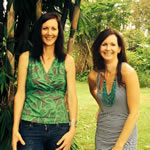 "Pinkfarm” has been created by 2 friends on a real food journey; learning, sharing, creating, inspiring and challenging politically correct nutrition. A country girl living on a farm on the beautiful Atherton Tablelands with a bustling house of 5 children and a city girl living in a metro Sydney townhouse with 1 beautiful son.